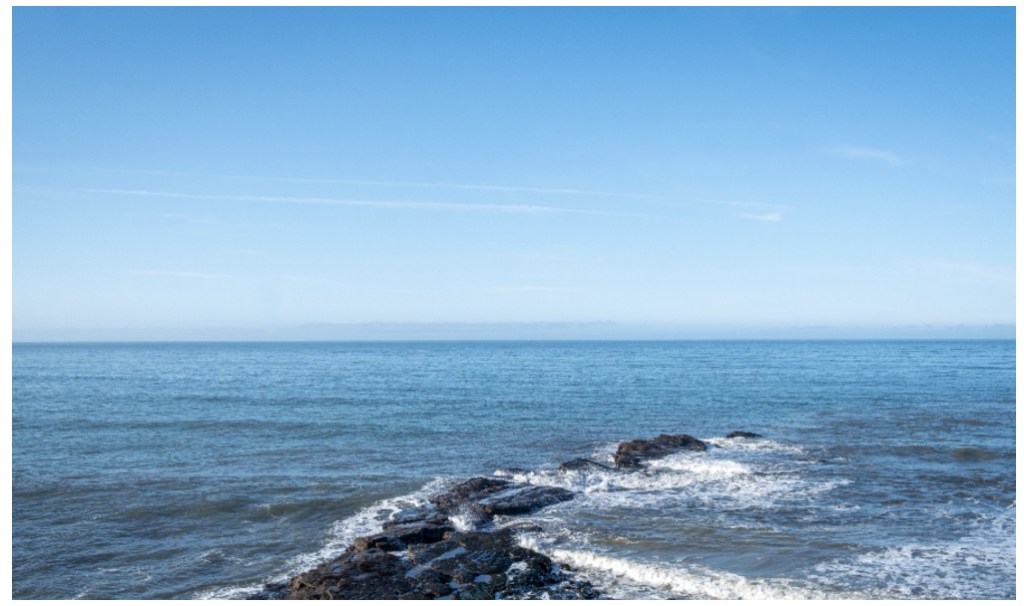
Photo by Matt Bango: StockSnap: Creative Commons
It’s not just CO2 and global warming. Many processes intersect in complex ways to threaten the integrity of our planet’s environment. Let’s take the health of the ocean as one very important example, with far reaching biological and economic consequences. Increasing water temperatures and CO2 concentrations play a major role in de-stabilizing the oceanic environment, but so do waste generation, nitrogenous runoff, and over-fishing. Moreover, these factors can interact in synergistic ways to compound their negative impacts. Further, the scale of these impacts is almost allways directly related to the size of the human population.
Heat and CO2 Effects on the Oceans
About 90% of the excess heat due to global warming is trapped in the oceans, thus moderating atmospheric warming (1). The uptake of heat into the sea has increased dramatically over the last couple of decades (2). However, recent studies suggest that the oceans’ ability to absorb heat may be declining (3), a truly frightening prospect since it implies yet more atmospheric warming.
In addition to heat, the ocean absorbs about 30% of human generated CO2 and plays a key role in sequestering carbon so that it doesn’t further contribute to global warming (4). This sequestration is partly due to CO2 simply dissolving in seawater, but mainly it is a biological process involving microscopic plants and animals (phytoplankton and zooplankton). All phytoplankton take up CO2, and when the organisms die, some of the carbon is deposited on the sea floor where it can stay for long periods. Additionally, many zooplankton and phytoplankton have shells made of calcium carbonate that are also deposited on the sea floor. However, despite these efficient sequestration mechanisms, oceanic CO2 is rapidly increasing, and since CO2 readily interconverts to carbonic acid, ocean acidity is also increasing. In fact, the Woods Hole Oceanographic Institution states that acidification is happening at “a rate that is 100 times faster than anything the ocean and its inhabitants have experienced in tens of millions of years” (5).
The greatest impact of increased acidity is on the many types of sea creatures that have shells made of calcium carbonate, including corals and economically important species such as clams and oysters. Increased acidity erodes existing shells and interferes with the deposition of new calcium carbonate rendering the creatures vulnerable.
The combination of increased temperature and increased acidity is having a profound effect on ocean ecology. One of the most dramatic examples is coral bleaching. Coral reefs play a unique role in creating habitat for thousands of species, but recent heating episodes have caused massively destructive bleaching of corals. Thus, at the Great Barrier Reef, living coral has been reduced by 50% over the last thirty years (6). Acidification compounds the damage caused by heat, since it hinders the ability of corals to build their calcium carbonate skeletons. (7). Heat and acidification also affect fish stocks in complex ways. As a result of warming, fish stocks are likely to decline in the tropics but increase in northern regions (8). However, there are likely to be significant exceptions to this such as the decline of the lobster catch in Maine (8) and the collapse of the Alaska snow crab fishery (9).
Pollution
Plastic products are extremely useful but almost indestructible in the natural environment thus making plastic waste a major detriment to healthy oceans. About 350 million tons of plastic waste are produced yearly with a significant fraction of that (estimates ranging from 1.7 to16 million tons) winding up in the ocean (10,11). Although developed counties have contributed most of the plastic now in the oceans, currently the major polluters are middle income countries like Brazil, India and the Philippines that have inefficient waste control systems (12). For a comprehensive view of plastic pollution see (https://ourworldindata.org/plastic-pollution). Most news headlines focus on sea creatures swallowing or becoming enmeshed in plastic, or plastic accumulation on scenic beaches or in gyres like the ‘Great Pacific Garbage Patch’ between Hawaii and California. But the most insidious threat is that oceans are becoming increasingly saturated with nano- and micro-particles that result from breakdown of plastics and that can enter the tissues of marine organisms and of the humans who consume them, with unknown health consequences (13).
Another major pollutant is the massive amount of fertilizer that runs off from agricultural land into rivers and thence to the sea. In 2022 about 207 million tons of fertilizer were produced globally (14), with a significant percentage of that entering the oceans. Excess fertilizer causes algal blooms that deplete the water of oxygen leading to death of marine organisms including fish, crabs and shrimp. There is currently a major oxygen depleted dead zone at the mouth of the Mississippi encompassing tens of thousands of square kilometers, while many other areas including the Baltic, the South China Sea and the Black Sea are similarly affected (15).
Overfishing
Over-exploitation of fish stocks, ranging from apex predators like sharks to smaller species like anchovies and herrings that are near the base of the marine food chain, has dramatically disrupted the oceanic environment. According to the World Wildlife Fund “The number of overfished stocks globally has tripled in half a century and today fully one-third of the world’s assessed fisheries are currently pushed beyond their biological limits” (16). Most of the damage is due to large ocean-going fishing boats, with China’s vessels being the worst offenders. China consumes about a third of the total world seafood catch and its fishing fleet is almost equal to all other nations combined. After exhausting their home waters, China’s vessels are now depleting fisheries in Africa and South America thus impoverishing local fishermen (17, 18).
However, serious damage can also be done by indigenous fishermen. In many tropical areas, but particularly in the Philippines and other Southeast Asian countries, fishing with dynamite or “fish bombing” is widely practiced (19). This is particularly devastating to coral reefs which may not recover from the blasts for years.
The Destructive Nexus of Human Activity
All of these damaging impacts interact in complex ways to degrade and destabilize the oceanic environment. For example, one study found that overfishing and excess nutrients (i.e. fertilizer runoff) reduced the tolerance of coral reefs to acidification (20). Overfishing contributes to plastic pollution since ‘ghost gear’, that is, abandoned fishing gear, may account for 10% of all ocean plastics (21). Plastic pollution causes structural damage to coral reefs and reduces their ability to fight disease or respond to environmental stress (22). Thus, the interactions of these various processes, each stemming from human activity, is accelerating the decline of our oceans.
The magnitude of each of these impacts is directly related to the size of the human population. Fewer people would mean less CO2 production, less demand for seafood and less plastic dumped in the ocean. It may be possible to ameliorate some of these harmful impacts, for example, better waste management might keep some plastic from the ocean. However, reducing the human population is the surest means to restore the natural balance of the world’s oceans.
References
- https://www.climate.gov/news-features/understanding-climate/climate-change-ocean-heat-content
- Li et al Nature Comm 14: 6888 (2023)
- https://www.newscientist.com/article/2467387-the-ocean-is-losing-its-ability-to-store-heat-as-the-planet-warms-up/#:~:text=The%20ocean%27s%20ability%20to%20absorb%20heat%20into,entering%20a%20new%20phase%20of%20climate%20change.
- https://ocean-climate.org/en/awareness/the-ocean-a-carbon-sink/#:~:text=It%20is%20composed%20of%20two%20compartments:%20a,the%20Deep%20Sea%20dragging%20down%20dissolved%20carbon.
- https://www.whoi.edu/know-your-ocean/ocean-topics/how-the-ocean-works/ocean-chemistry/ocean-acidification/
- https://www.fisheries.noaa.gov/insight/understanding-ocean-acidification
- https://www.ucsusa.org/resources/co2-and-ocean-acidification
- north https://www.whoi.edu/know-your-ocean/did-you-know/how-does-ocean-warming-affect-fisheries/
- https://www.fisheries.noaa.gov/feature-story/snow-crab-collapse-due-ecological-shift-bering-sea
- https://ourworldindata.org/how-much-plastic-waste-ends-up-in-the-ocean
- https://ourworldindata.org/how-much-plastic-waste-ends-up-in-the-ocean )( https://www.rts.com/blog/plastic-pollution-in-the-ocean-facts-and-statistics/#:~:text=There%20is%20an%20estimated%2075%20to%20199,entering%20the%20marine%20environment%20every%20single%20year.&text=That%27s%20a%20combined%209.5%20billion%20metric%20tons,billion%20metric%20ton%20has%20already%20become%20waste
- https://ourworldindata.org/plastic-pollution
- Peng et al Sci Total Environ 698:134254, 2020
- https://www.statista.com/statistics/1290786/global-fertilizer-production-by-nutrient/#:~:text=In%202022%2C%20global%20fertilizer%20production%20reached%20a,improve%20soil%20fertility%20and%20increase%20crop%20yields.
- https://www.americanscientist.org/article/the-increasing-problem-of-nutrient-runoff-on-the-coast
- https://www.worldwildlife.org/threats/overfishing
- https://e360.yale.edu/features/how-chinas-expanding-fishing-fleet-is-depleting-worlds-oceans
- https://dialogo-americas.com/articles/chinas-rampant-illegal-fishing-is-endangering-the-environment-and-the-global-economy/
- https://www.sfbusa.org/fish-bombing-faqs
- Anthony et al Glob. Chang Biol 17 :1798, 2011
- https://sdg.iisd.org/commentary/guest-articles/ghost-gear-the-hidden-face-of-plastic-pollution/
- Pinheiro et al Nature 619:311-316, 2023


 EQUIPOISE
Leave a reply to epittetoepitteto Cancel reply