I am the recording secretary for a committee in my organization. Lately I have been using an iPad with a program that listens to our discussions and transcribes them into text. Then I use the Claude AI system to generate committee minutes from the transcription. Being a confirmed Luddite, I am surprised by how well it all works. My experience is a tiny example of how AI is infiltrating almost everything we do, but it has prodded me into thinking more about AI and its consequences for our lives and for the planet. There has been endless discussion about AI’s power to transform society or conversely to destroy it. In this post I am going to ignore the potentially existential threat that AI will become super-intelligent and self-aware and then choose to turn on its human masters. Rather I want to elaborate on AI’s potential impacts on the environment, both negative and positive.
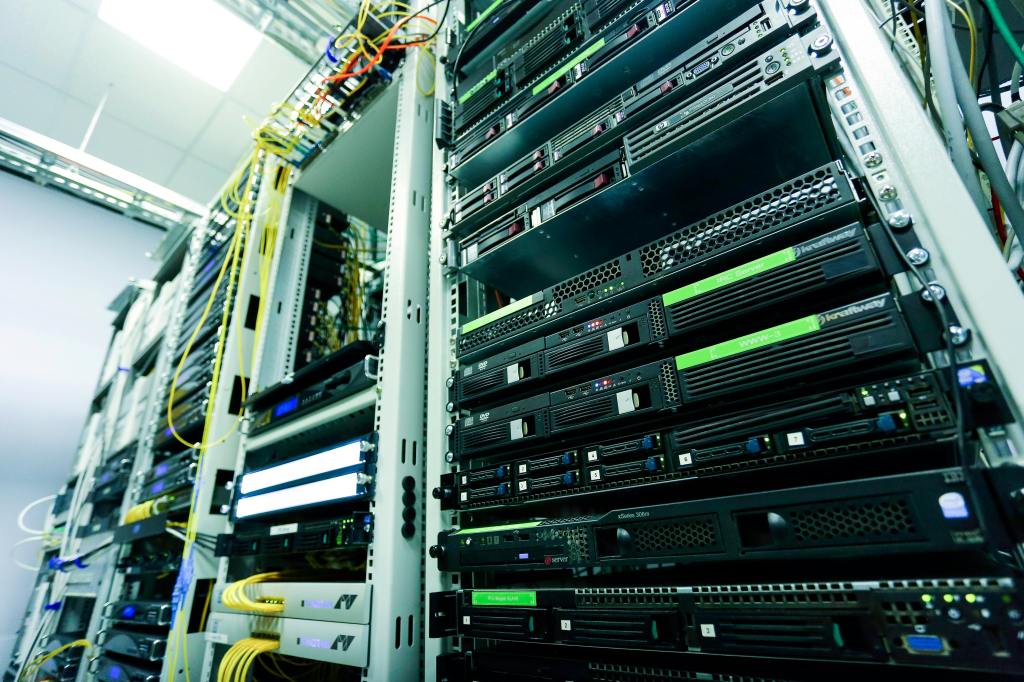
Data center interior. pexels-sejio402–6466141
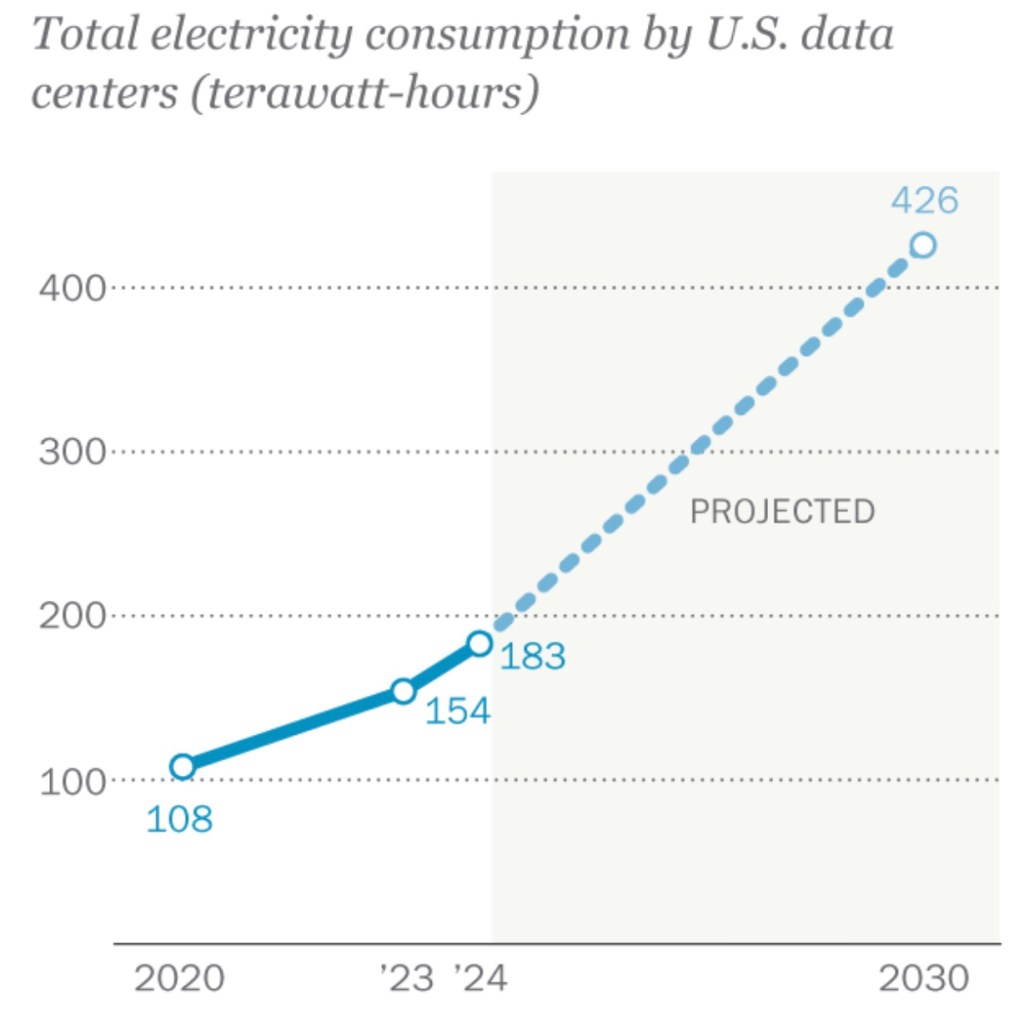
The advent of generative AI models like ChatGPT and Claude has vastly accelerated the deployment of massive data centers each housing thousands of computer servers. These entities are ravenous consumers of both energy and water with both local and disseminated impacts. The current and projected resource utilization of data centers is truly mind boggling. One estimate suggests that in 2024 data centers used about 1.5% of global electricity production with an expected doubling by 2030 to about 1000 terrawatt-hours and further increases beyond that. For comparison, the 2030 estimate equates to the total energy consumed by Japan in one year. AI models use energy for two purposes: the first is for training the model on vast amounts of data, while the second is to respond to search queries from users. While to date much of the AI energy expenditure has involved training, the expectation is that the portion used for query responses will grow rapidly. For example, a Chat GTP search is estimated to use 5 times more energy than a simple web search. In addition to direct use of energy, the creation of the hardware used for AI systems is energetically costly, since the graphics processing chips (GPUs) typically used for AI are much more complex to fabricate than standard chips (CPUs) and thus require more energy to produce.
From this source
Where does all the energy used by AI data centers come from? Initially many of the major players committed to extensive use of renewable energy, entering into preferred provider agreements with green energy suppliers and using storage batteries instead of diesel generators for back-up power. However, the move to renewable energy for AI has recently lost some if its momentum, particularly in the USA, for both economic and political reasons. Currently, about 40% of US data center power is from natural gas as opposed to 24% from renewables. Interestingly, the states with the greatest growth in data centers are also where gas fueled power generation is increasing most rapidly. Beside the obvious concern about increased CO2 generation, the huge surge in energy needed for AI is creating problems for ordinary people, since electric power companies are increasing residential rates to fund the expansion of power plants and transmission lines. One study indicated that residential electricity costs increased 287% over 5 years in areas near major data centers.
Besides electric power, data centers also guzzle enormous amounts of water, for a large center up to 5 million gallons per day or enough to supply a town of 50,000 people. The water is mainly used to cool the vast banks of computers. Since the cooling occurs by evaporation that means that little water is recycled to recharge water supplies. In areas where water comes from tapping underground aquifers this has led to extensive disruption of local supplies. We have all become familiar with stories of people’s wells drying up when a data center moves in nearby.
A key question is why are AI data centers so huge and resource expensive? The answer may lie the ‘scaling hypothesis’, namely the concept that the major way to increase AI performance is simply to have AI models get bigger and bigger. Consequently, data centers are also getting bigger- astronomically bigger! Thus, while the largest current installations use 0.2–0.4 gigawatts of energy, there are plans for 5-gigawatt facilities- enough to power 5 million homes. An unfortunate consequence of the scaling concept is that only the richest companies would be able afford to develop such massive models and data centers, potentially leading to a few large corporations dominating the entire field. Interestingly, the emergence of newer AI models has challenged the scaling hypothesis, as discussed in more detail below. However, at present, most companies seem to be plowing ahead with ever-larger data centers. A case in point being Elon Musk’s recently constructed Colossus-1 center in Tennessee that uses 150 megawatts of power or enough for 100,000 homes. Unfortunately, much of that power comes from methane ( natural gas) powered gas turbines that emit substantial amounts of harmful nitrogen oxides as well as CO2. Somewhat surprisingly, given the current administration, the EPA has recently stepped in to challenge the use of turbines at the Colossus site.
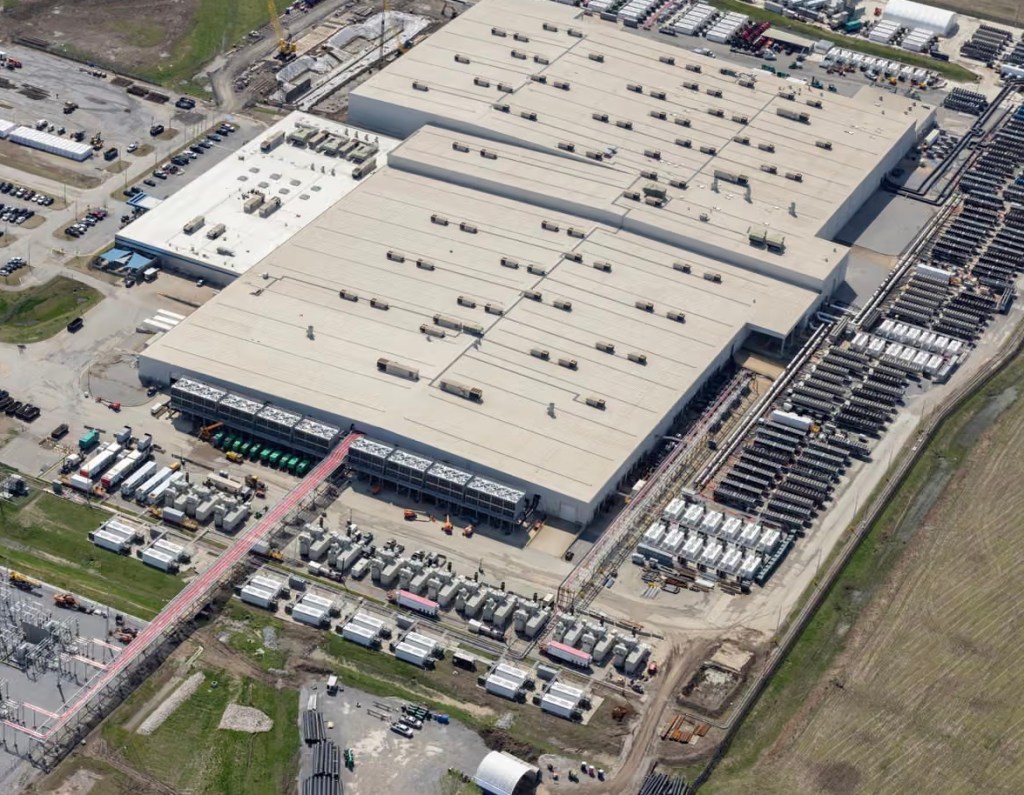
Colossus-1 AI data center: From this source
Thus, the recent history of AI data centers has been a story of ever-increasing utilization of electric power and water resources. This has had enormous negative impacts locally such as depletion of groundwater, but it has also had more distributed impacts including charging consumers more to pay for the power generation and grid resources needed by the data centers.
Can AI Energy Consumption Be Reduced?
The massive negative environmental impacts of AI have elicited a great deal of concern; thus many strategies for blunting those impacts are currently being explored.
Better Design of AI Models. Early in 2025 the AI community and its financial backers were profoundly shocked by the appearance of DeepSeek, a Chinese AI model that seemed to be able to do more with less. Reputedly DeepSeek cost only $6 million to build as compared to $100 million for ChatGTP, while offering comparable performance. The low cost stems from the fact that DeepSeek uses 1/10 of the computing power of other models by virtue of more efficient algorithmic design. This includes a “mixture-of-experts” architecture that activates only a small number of parameters for any task thus increasing efficiency and reducing cost. Moreover, unlike many other AI models, DeepSeek is open source thus allowing users to verify capabilities and personalize applications. DeepSeek has claimed that its model uses 10–40 times less energy than other AI models. If true and if the DeepSeek architecture were widely adapted, that would radically change energy projections for AI data centers. However, these claims have been disputed. For example, in one test DeepSeek used more energy to answer a question than Meta’s AI model, although DeepSeek provided a much longer and more complex answer. This might be indicative over an ‘overkill’ tendency with AI where very powerful models use a great deal of processing energy to generate overly complex answers. Despite these uncertainties, DeepSeek and other similar models at least suggest that there are computational pathways to reduce the massive energy requirements of AI.
On Device AI. Another strategy to reduce energy consumption is to distribute AI computations to local devices. Currently, on-device AI is being used for tasks such as facial recognition on cell phones, autonomous driving, control of drones and video games. It allows faster processing of local information and can function even in the absence of an internet connection. Additionally, security is increased since personal data is held locally rather than in the cloud. Some estimates suggest that on-device AI can provide a 100 to 1,000-fold reduction in per task energy consumption compared to cloud-based AI.
Green Data Centers. There has been lots of discussion specifically about reducing the energy impact of massive data centers. The green data center concept involves multiple approaches for diminishing energy use or re-utilizing some of the energy expended. Since air cooling of the massive computer banks is very energy intensive, one approach is to move to liquid cooling with water or other fluids. Another approach is to use the waste heat for beneficial purposes such as generating electricity that can be fed back into the computer banks. Obviously, use of renewable energy sources such as solar, wind or geothermal would be a key part of a ‘green data center’. The problem, however, is that these ideas have not been widely implemented presumably because they add additional cost to data center operation.

Green data center concept junho-aqIq5VI4Ew0-unsplash
Transparency and Regulation. Data centers need to adhere to some basic federal regulations regarding combustion product emissions and waste water discharge as well to local zoning codes. However, regulations in most localities are geared to building homes or shopping centers and thus are probably ill-suited to dealing with the massive scale of contemporary data centers. There are also voluntary standards through the federal Energy Star Program and other groups. However, a major issue is lack of transparency about environmental impacts since AI companies regard the data as proprietary. Further, the current administration’s pursuit of ‘AI dominance’ has led it to exempt or scale back application of environmental regulations to data centers. Thus, there is currently a sort of ‘wild-west’ aspect to the AI data center industry in the US, with insufficient information and little regulation of environmental impacts.
Thus, technologies exist that could potentially reduce the negative environmental impacts of AI data centers. However, such approaches are currently not being widely applied. In the USA lax regulation at the federal level combined with a welter of inadequate and contradictory local policies and regulations have opened the door for AI companies to maximize profit with little thought for environmental consequences.
Is AI Doing Anything Beneficial for the Environment?
The discussion above illustrates the many negative environmental impacts of AI data centers, but can AI do things that are actually positive for the environment? Apparently so. Two fields where AI is finding increasing use are wildlife conservation and maternal health/family planning. The key aspects of AI that are being applied in these fields are image analysis (similar to facial recognition technology) and the ability to analyze massive data sets. AI is often used in conjunction with other advanced technologies including drones and sophisticated miniaturized cameras or other recording devices. The application of AI in these fields is very scattered so it is difficult to discern major trends. Thus, I will simply provide some interesting anecdotal examples.
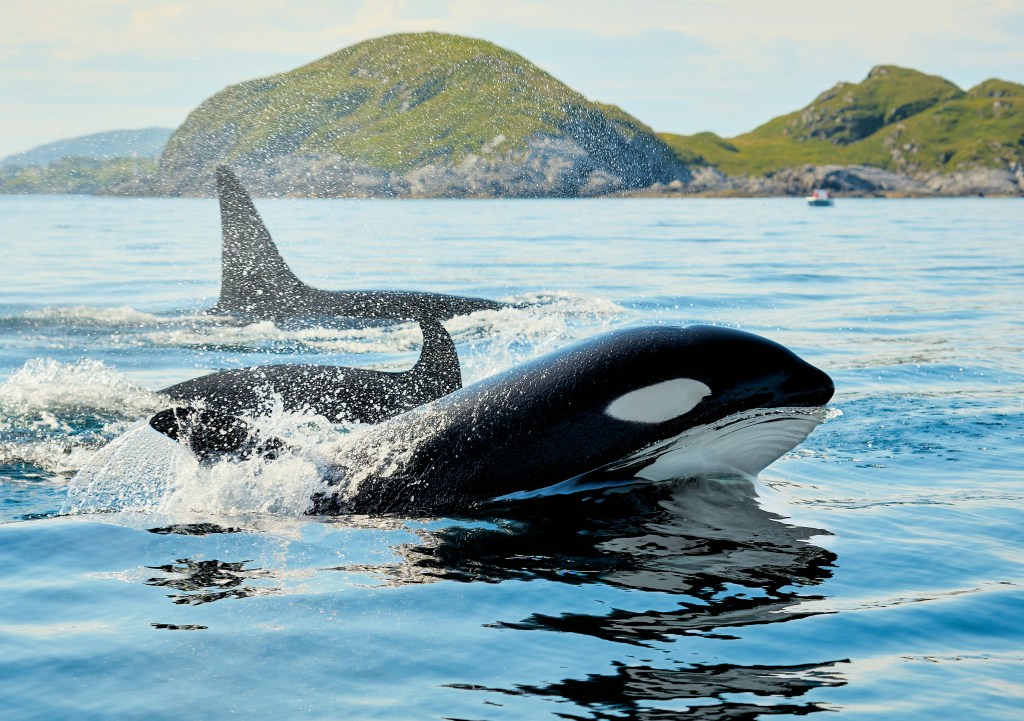
Conservation. Wildlife conservation has a long history of using in person observation, camera traps, and tagging to monitor changes in populations of various species. A major change in strategy wrought by AI is the ability to track individual animals within populations using image recognition technology. For example, various fish from trout to whale sharks have unique markings on their skin that AI-controlled cameras can instantly recognize, thus allowing wildlife biologists to monitor their movements and behavior. Obviously, this approach can be applied to many other species, from killer whales to giraffes, that have any sort of unique markings. The next step in this strategy is to use AI image recognition to monitor multiple species within an ecosystem. This approach has some unfortunate technological similarities to the mass surveillance used by authoritarian regimes, but here the technology is applied in a good cause.
vidar-nordli-mathisen-qM9tSt_5orU-unsplash
The other major impact of AI is in crunching massive amounts of data from field observations. One interesting report describes a University of Alberta researcher who studied nighthawk behavior using audio recordings. However, the recordings also contained all of the cacophony of the nighttime forest and thus required laborious parsing by the research team. The answer was an AI program that could be trained to identify the nighthawk sounds against the background noise and thus provide rapid analysis of many hours of recordings. Once again, this approach can be extended to monitoring and analyzing many other situations from wolf howls to whale songs.
Another important example is iNaturalist (iNat), an AI-driven smartphone app that can identify hundreds of thousands of plants or animals. The app has become an important tool for citizen-science and has resulted in the discovery of many new species. This includes a recently found new species of praying mantis of the genus Inimia that has been officially named Inimia nat (iNat).
Thus, AI is rapidly revolutionizing wildlife biology as the technology converts previously impossible tasks to easily accomplished ones. However, there have also been multiple criticisms of the use of AI in conservation. The emphasis on a technical approach may undercut traditional field biology approaches that have been the mainstay of conservation for decades. As one wildlife biologist aptly stated “ I know people who are modeling owls and owl habitat who have never seen an owl“.
Family Planning/Maternal Health/Population Control. As outlined in a post on my personal blog and in my past posts on MEDIUM, the path of world population has now bifurcated, with one group of nations including those in East Asia and Western Europe experiencing reduced birthrates and the prospect of population decline, while other nations, particularly in sub-Saharan Africa, have populations that are still growing explosively. Rapid population growth contributes to many problems in these countries including youth unemployment, de-forestation, destruction of wildlife and general poverty. In many instances increased access to family planning and better health care for mothers and children would be of great benefit. However, despite this pressing need, recently both the USA and European countries have drastically slashed support for such efforts. While there is no way that AI can fill the gap caused by these funding cuts, there are, however, many interesting new uses for AI in family planning in Africa and other regions, with a few examples mentioned below.
The rapid spread of cell phones in Africa has allowed people in remote areas to access modern health information. For example, the PROMPTS service is having a major impact on maternal-child heath in Kenya and is due to spread to other countries. Using a cell phone app, mothers can describe their symptoms which are then analyzed and prioritized by AI. Routine advice is provided by the AI agent while more serious issues are directed to medical personnel. The system also automatically factors in local information that can affect health such as weather conditions. An even more sophisticated approach comes from a study in Lesotho where a phone chatbot was used to disseminate sexual health information to young women. The AI-driven chatbot employed an appearance, facial expressions, voice and mannerisms recognizable by women in Lesotho. Another interesting example comes from the Infectious Disease Institute at Makerere University in Uganda where AI is being used to analyze patterns of sexually transmitted disease and to promote public health measures to counter those diseases.

Image from this source
Thus, both wildlife conservation and family planning in less developed countries are currently gleaning valuable benefits from AI technology. There are obviously many other ways to use AI in monitoring and improving the environment. Certainly, drone technology coupled with AI image analysis has had a major impact on study of land utilization, allowing researchers to readily monitor problems such as de-forestation or desertification.
Summing It Up.
The rapid growth of massive AI data centers has created enormous negative impacts on the environment including consumption of huge amounts electricity leading to vast outputs of CO2 and other pollutants, regional depletion of groundwater supplies, as well as more localized effects as farms or woodlands are converted to vast data center structures and their supporting roads and transmission lines. There exist technological approaches that could buffer some of the negative impacts of AI data centers, but adoption has been limited due to lax or ineffective regulation. AI clearly can have many positive uses in conservation, in family planning, and in many other areas that may be beneficial to the health of the planet. However, those positive aspects are dwarfed by the enormous environmental costs of AI as the pursuit of profits overwhelms all other concerns.

 EQUIPOISE
Leave a comment