Declining fertility rates gave rise to legitimate concerns — but rapidly morphed into Far Right politics pushed by the tech bros
What do billionaire tech-bros, dictators and right-wing politicians have in common? Elon Musk, Victor Orban, Kim Jong Un and J.D. Vance may not agree on a lot of things, but they all want women to have more babies! They all support various versions of the pronatalism movement, which itself is a bizarre mish-mash of often conflicting concepts and policies. So how did pronatalism get to be a major part of global political and cultural discourse? Let’s take a look at some of the background.
POPULATION TRENDS
From the time of the Industrial Revolution until quite recently the world’s population grew at an almost exponential rate to its current level of 8.3 billion. However, in the past few decades, population trends have bifurcated. One cohort of countries, mainly in Sub-Saharan Africa and South Asia, continue to have high birth rates and rapid population growth, while many nations in Europe, East Asia and South America are experiencing rapid reductions in fertility and the prospect of substantial population declines in the relatively near future. The USA has been somewhat buffered from these trends because of its high immigration rate, with most of its projected population growth ascribed to immigration, but that may radically change given the policies of the current administration. These trends are illustrated below.
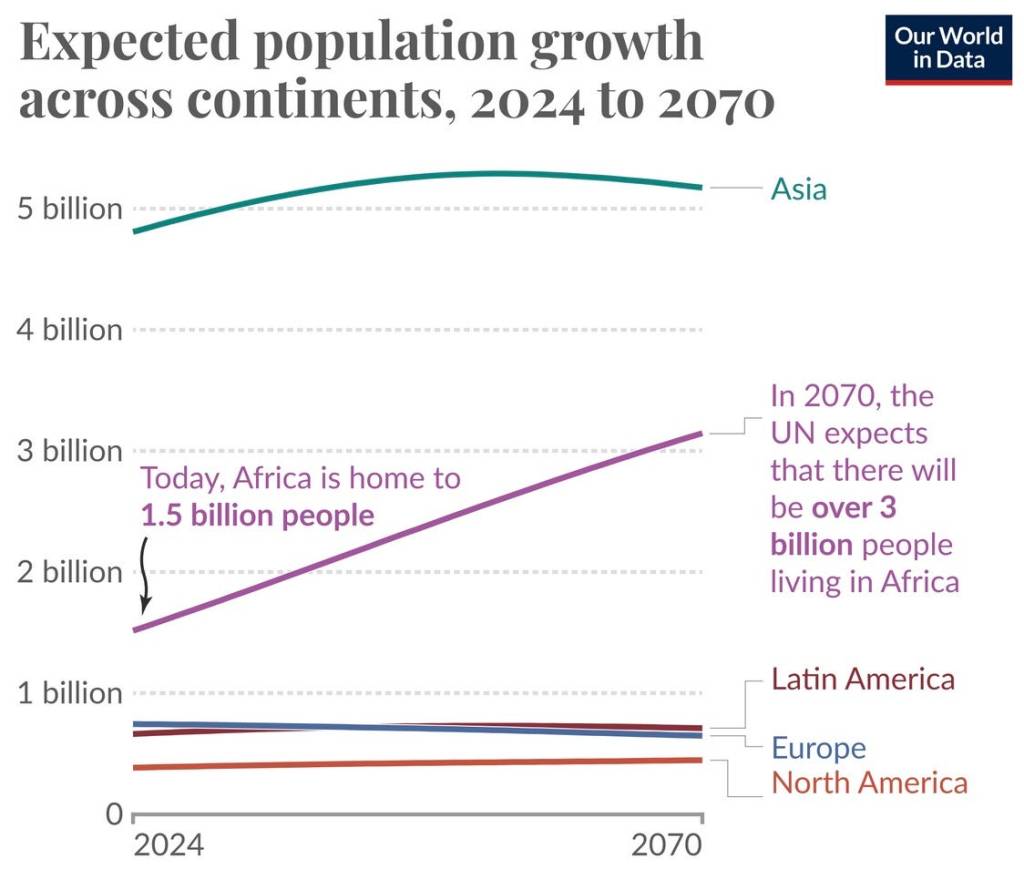
Global population projections (source).

USA population projections (US Census Bureau 2017 projections).
PRONATALIST IDEAS: GOOD AND BAD
Declining fertility rates that first appeared in Europe and Japan gave rise to legitimate concerns about negative aspects of population loss, but unfortunately that rapidly morphed into the current pronatalist stew with its juicy mix of racism, sexism, futuristic fantasies and extreme right-wing politics. Let’s try to sort out the sense from the nonsense.
Reduced fertility entails a shift in the age structure of the population with fewer working age individuals and more elderly. This potentially creates a dual problem. Fewer workers mean less tax revenue that is needed to support health care and services for the elderly. It also means that there are fewer younger people to actually assist in elder-care. This is clearly a very legitimate concern.

Eldercare (Pexels-rollz-1995472).
There is good evidence that creativity in many fields peaks at a relatively young age. Thus, there is concern that a population with fewer young people will display less innovation and dynamism. While this seems a reasonable assumption, as yet there is little data to support it. Indeed, one measure of economic dynamism, per capita GDP, seems to have actually increased in some countries with declining populations.
A smaller population obviously means fewer consumers. That is a fundamental problem for a capitalist system built on the assumption of constant growth. This aspect of population decline may be a key reason why pronatalism has attracted a number of billionaire capitalists. Clearly, a declining global population will imply reductions in industrial output, trade, energy utilization, use of raw materials, construction and many other facets of the economy. Thus, this aspect of population decline has implications for the entire organization of future society.
Beyond concerns that are at least partially based on reason and data lie a whole range of additional pronatalist ideologies ranging from nonsensical to poisonous.
IMMIGRATION AND THE GROWTH OF THE RIGHT WING
Rapid population growth accompanied by lack of opportunity, poverty, political instability and incessant war has created an enormous drive for migration from Sub-Saharan Africa and parts of the Middle East and South Asia towards more developed countries. In recent years European countries admitted large numbers of migrants, especially from war-torn areas such as Syria, Somalia and Afghanistan. Meanwhile, in the USA long-standing patterns of migration from Mexico and Central America surged to unprecedented levels during the Biden administration.
Large numbers of immigrants having racial, cultural and religious backgrounds different from host country citizens will inevitably cause strains on the local economy, social services and personal interactions. However, such strains have been blown out of proportion by right wing parties seeking political advantage. In Europe rightist parties including the Alternative für Deutschland in Germany, Fratelli d’Italia in Italy, Rassemblement National in France and similar groups in the UK, the Netherlands and in Nordic countries have adopted stringent anti-immigrant stances. While officially these parties distance themselves from overt racism and extremism, many of their followers are far less restrained on social media and sometimes in their public pronouncements.
For example, the Dutch right-winger Eva Vlaardingerbroek stated (regarding immigrants) “They are demanding the sacrifice of our children on the altar of mass migration. Let’s not beat about the bush — this is the rape, replacement and murder of our people… Remigration is possible, and it’s up to us to make it happen.”
A key basis of the anti-immigrant movement is the patently false ‘Great Replacement’ or ‘White Replacement’ theory, namely that a cadre of international elitists is seeking to replace white Europeans with non-white people, especially from Muslim countries. A very natural corollary to the ‘white replacement’ concept is the notion that whites should have more babies, and thus anti-immigration ideas and pronatalism have merged in the conceptual universe of the far right. With anti-immigrant parties now in power in Italy and having great influence in Germany, France and several other countries, the flow of immigrants to Europe has slowed considerably since its peak. Nonetheless, immigration remains a contentious issue with powerful political impacts.

Proud Boys demonstration Washington DC Dec. 12, 2020. Wikimedia.
In the USA, controversies about immigration have been part of the political landscape since the beginning of the republic. While the US attracts immigrants from around the world, by far the largest number have come from Mexico and other parts of Latin America. Since the USA has had a large indigenous Hispanic population dating from the time that Texas, California and the desert southwest joined the union, Hispanic immigrants in the USA may seem less ‘alien’ than say Afghans or Somalis in Berlin or Stockholm. Nonetheless, in recent years there has been enormous political push-back against rapid immigration from Latin America, largely based on concerns about loss of jobs or about criminality among immigrants. The immigration surge has also given rise to the American version of the ‘White Replacement’ ideology with its inevitable connection to increasing birth rates preferentially among white people. For example, American ultra right wing groups such as the Proud Boys and the Oath Keepers have adopted strong anti-immigrant stances and support for the white replacement concept as part of their rhetoric.
IMPLICATIONS OF PRONATALISM FOR WOMEN
Pronatalism supporters seem oblivious to a fact, aptly stated in a recent article in the Guardian “pronatalism — especially when paired with anti-abortion policy — often overlooks the disproportionate effect that having more babies has on women”. With its emphasis on having more children, the pronatalism movement espouses policies that restrict women’s’ reproductive freedom, limit their career opportunities, and emphasize traditional male-dominant gender roles.
Many of these more extreme aspects of pronatalism were on display at the recent Natal Conference in Austin Texas, a meeting that involved a bizarre mix of tech-bro futurism, religious fundamentalism, media exploitation and ultra-right-wing politics. Some notable participants included ‘influencers’ Malcolm and Simone Collins who have use genetic testing and in vitro fertilization to produce a large brood of supposedly superior children. It also included conference organizer Kevin Dolan who has described love between men and women as “a relationship between superior and inferior”. Another participant was Jack Posobiec, a right-wing political activist connected to the Trump organization who attained everlasting infamy for his role in the bogus ‘Pizzagate’ conspiracy. In his Nat Con presentation, he styled opponents of pronatalism as “enemies of civilization”. An enthusiastic sponsor of Nat Con is right-wing businessman Charles Haywood who has stated “And generally women should not have careers. They should be socially stigmatized if they have careers.”
Thus, the more extreme versions of pronatalist philosophy clearly involve a major threat to the social and economic progress made by women over the last few decades.
THE TECH-BRO APPROACH TO PRONATALISM

Cartoon image generated by AI.
A substantial number of wealthy tech entrepreneurs have become vocal adherents of pronatalism. This cast of characters includes Elon Musk of SpaceX and Tesla fame, venture capitalist Marc Andreesen, Peter Thiel a founder of the defense tech firm Palantir, and Sam Altman of ChatGPT. Their views are varied and complex but seem to include both elements of ‘effective altruism’ as well as more selfish concerns about themselves and their offspring. The tech-bro view of declining fertility goes beyond a simple desire to confront the problems of a reduced population on earth. Rather it visualizes the need for vast numbers of humans who will colonize Mars and then move on to occupy other worlds. This is often accompanied by the notion of ‘a thousand Einsteins’ wherein huge populations will generate a proliferation of geniuses who will solve all of humanity’s problems. Of course, this approach stumbles upon the usual Achilles heel of effective altruism in that wondrous long-term projects may have devastating short-term consequences (in this case poverty and environmental devastation due to overpopulation on earth).
The tech billionaires are not just talking about having more babies, they are practicing what they preach. For example, Musk has 14 children by 4 different mothers. In addition, the tech-bros are investing in projects and companies that intend to reduce the uncertainties and risks of child bearing and to produce offspring with superior physical and intellectual abilities. Some of the technologies being explored include full genome sequencing to identify genetic markers for diseases or, conversely, for enhanced abilities, as well as advanced in vitro fertilization plus artificial wombs to de-risk fetal development and birthing. If these technologies actually succeed, presumably their high cost will mean that they are available only to the very wealthy, thus essentially becoming eugenics for the elite.
Another recent enthusiasm in the tech-bro world that is reciprocal to their involvement in reproductive technology is an interest in longevity. Thus, many tech entrepreneurs have invested in companies working on anti-aging methodologies. This includes Sam Altman, Peter Thiel, Jeff Bezos (Amazon), Larry Page & Sergey Brin (Google), Larry Ellison (Oracle) and Mark Zuckerberg (Meta). In some respects, investments in increasing lifespan are a very good thing since increased longevity would presumably reduce the diseases of old age and thus increase the ‘healthspan’. However, one wonders if the cost of these technologies will be prohibitive thus further compounding the enormous inequalities in society.
In summary, both in Europe and the USA, legitimate concerns about declining populations have been conflated with a wide range of bizarre ideas, some of which merge into right-wing extremist ideology.

On to Mars! (dmitry-grachyov-gkj-_KRTLJSs-unsplash.jpg).
ALL ATTEMPTS TO REVERSE THE DECLINE IN FERTILITY FAILED
So, what can be done about population decline? The threat of declining populations has led several autocratic countries to try all sorts of measures to convince women to have more babies. These efforts have universally and spectacularly failed. Both Hungary and Russia have tried tax relief, loans, and direct payments to mothers to promote fertility, but despite these efforts both countries have total fertility rates of about 1.4, among the lowest worldwide. Likewise, China has aggressively advanced pronatal policies including dropping its infamous 1-child policy to instead permit up to 3 children. As well it has used a variety of other measures to promote fertility ranging from ‘baby bonuses’ to a tax on contraceptives. Despite these actions, China’s birth rate and total population continue to fall. Democratic societies, including the Nordic nations have also tried to promote fertility, using gentler methods than authoritarian regimes, such as parental leave, subsidized child care and medical benefits. But again, these policies have failed to make a dent in the trend toward declining populations.

Hungary total fertility rate (source).
EFFECT OF THE POLYCRISIS
Why is this happening? Why the seemingly irreversible decline in fertility despite strong economic incentives toward parenthood. One compelling notion is that people are afraid to have children because of the ubiquitous ‘polycrisis’ that is impacting all societies and creating enormous uncertainty about the future. The polycrisis is a multi-armed entity. It includes the apparently inexorable march of climate change and environmental degradation. It also encompasses the loss of upward economic and social mobility and the growing economic inequality in many nations. Most recently it has been bolstered by the threat of massive job losses due to the growth of AI. All of these interlinked concerns are amplified in the endless echo-chamber of social media.
This miasma of negativity affects people at a very personal level. One young woman quoted in the NY Times said “my instinct now is to shield my children from the horrors of the future by not bringing them to the world”. Even wealthy people who have no economic barriers to parenthood are influenced by a pervasive sense of dread. For example, the singer Miley Cyrus stated “Until I feel like my kid would live on an Earth with fish in the water, I’m not bringing in another person to deal with that”. Thus, this worldwide feeling of uncertainty about the future seems to outweigh the economic incentives to child-bearing that any government, whether democracy or autocracy, have been able to provide.
However, in addition to the amorphous dread inspired by the polycrisis, more tangible concerns have also impacted fertility both in the USA and Europe. For example, the combination of spiraling housing costs and huge shortfalls in day care have made many families more reluctant to have children.
The vague dread typifying the polycrisis has been enormously amplified in the USA by key economic and social developments over the last forty years or so. Since the time of the Reagan administration and continuing under both Republican and Democratic leadership, the American economy has operated under ultra free market principles originally developed by economists at the University of Chicago. These include de-regulation of business, free movement of capital, and an emphasis on shareholder return as the most important goal for corporations. These policies have created enormous wealth for corporations and rich investors, to the detriment of most Americans, particularly blue-collar workers.
One of the major consequences has been the decline of manufacturing due to outsourcing to China and elsewhere, and the attendant loss of well-paying blue-collar jobs. A second consequence has been the growth of the ‘Gig economy’ with stable white- and blue-collar jobs replaced by transient employment with no health or retirement benefits. These effects have resulted in persistent economic and social instability within the middle and lower income cohorts of American society, leading to drug and alcohol abuse, declining health, and family break-ups. To some extent these pernicious effects have been buffered by America’s non-too-generous social programs including Medicaid and SNAP (food stamp) benefits.
However, such programs have been under attack from right-wing politicians and pundits for decades, and the current administration has now amplified that attack by seriously curtailing social service programs. This includes new work requirements for Medicaid, a major reduction in SNAP funding, and rolling back support for public health programs. Many of these changes are reflected in Trump’s “One Big Beautiful Bill” that projects cutting over one trillion dollars from Medicaid and SNAP over a ten-year period. Thus, uncertainty and instability in the job market, coupled with a very frayed governmental support network, have led many women to decide against maternity.

Impact of the One Big Beautiful Bill on projected SNAP funding (source).
THE HYPOCRISY OF THE PRONATAL RIGHT
That many right-wing politicians, as well as the tech-bro contingent, are such enthusiastic supporters of pronatalism is hypocrisy in the highest degree!
Thus, a number of conservative republican Senators and Congressmen have been very vocal in their support of increased child-bearing. This includes Vice-President Vance, Senator Hawley and Congressmen Keith Self, David Schweikert and Brandon Gill. For example, in his first public address as VP Vance said “I want more babies in America”, while Congressman Self has said “We need to encourage marriage. We need to encourage childbearing”. In addition to their enthusiasm for American women having more babies, what else do these right-wing politicians have in common? They all voted for the “One Big Beautiful Bill” that cuts the very programs that would provide the economic stability needed by low- and mid-income mothers!
As for the tech bros, let’s look at what they have unleashed on the public. First, a radical change in the flow of information that has led to its monopolization by a few large corporations and the decline of local news sources, resulting in a lost sense of community. Second, social media that are addictive and that intentionally promote discord by accentuating differences between people. And finally, AI that threatens massive job losses while creating major environmental problems. Thus, while the internet, social media and AI are marvels of technology, they also generate economic and social instabilities that are inimical to people’s desire to have families. But the massively wealthy corporations that are home to these disruptive technologies, as well as their ultra-rich owners, have essentially done nothing to mitigate their negative effects on family stability.
Poverty, war and political oppression have driven unprecedented levels of immigration from less developed countries to Europe and the USA during the last decades. This has created social and economic strains that have been exploited by right wing parties with strident anti-immigrant stances, including support of the phony ‘white replacement’ theory. A close corollary has been the promotion of pronatalism with the goal of increasing births, especially of white children. While the Silicon Valley billionaires may not share the racist ideology of the extreme right, they also espouse pronatalism with the goal of ever-expanding growth of populations and of the capitalist system. The irony in all of this is that the policies of the right and the actions of the tech-bro billionaires are diametrically opposed to the conditions needed to promote increased child-bearing.
The reduction in fertility due to the sense of doom brought about by the global polycrisis is vastly compounded by right-wing politician’s cuts to the very social services that support families. Meanwhile, the waves of new technologies unleashed by the tech-bros spread disinformation and distrust, undermine established social and economic patterns, and create enormous anxiety about the future, hardly a recipe for supporting motherhood. So are we irreversibly locked into this self-destructive pattern, or will people wake up and take the steps necessary to ditch the extreme right and cut the tech billionaires and their trillion dollar corporations down to size?
Epitteto is a biomedical scientist with a lengthy academic career now interested in the complex connections between the environment, population and technology.




Leave a Reply